THe SAFE & SOUND PROTOCOL
Think clearer. Feel steadier. Connect deeper.
Five hours of music. Long-lasting neurological impact.
The Safe and Sound Protocol (SSP) is a clinically validated listening therapy that directly regulates the autonomic nervous system — improving stress tolerance, emotional resilience, sleep quality, and social connection.
It is not a relaxation technique. It is not a mindfulness exercise. It is a direct nervous system intervention with measurable, lasting results.
the Science behind SSP
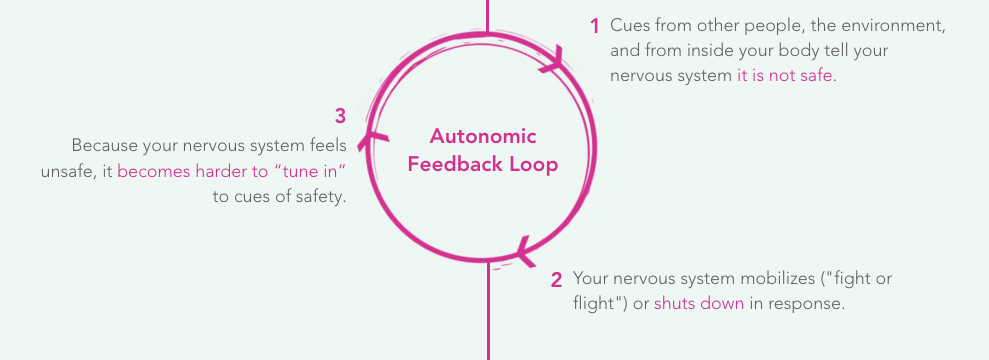
The autonomic nervous system is constantly scanning your environment, your body, and the people around you to answer one question: “Am I safe?”
When it senses safety, the system stays calm, flexible, and responsive. When it doesn't, it shifts into protection — showing up as anxiety, irritability, shallow breathing, or feeling on edge. If the threat signal doesn't resolve, the system may shift into shutdown: low motivation, emotional flatness, fatigue, digestive disruption.
Repeated stress over time trains the nervous system to reach these states more easily — and exit them less readily.
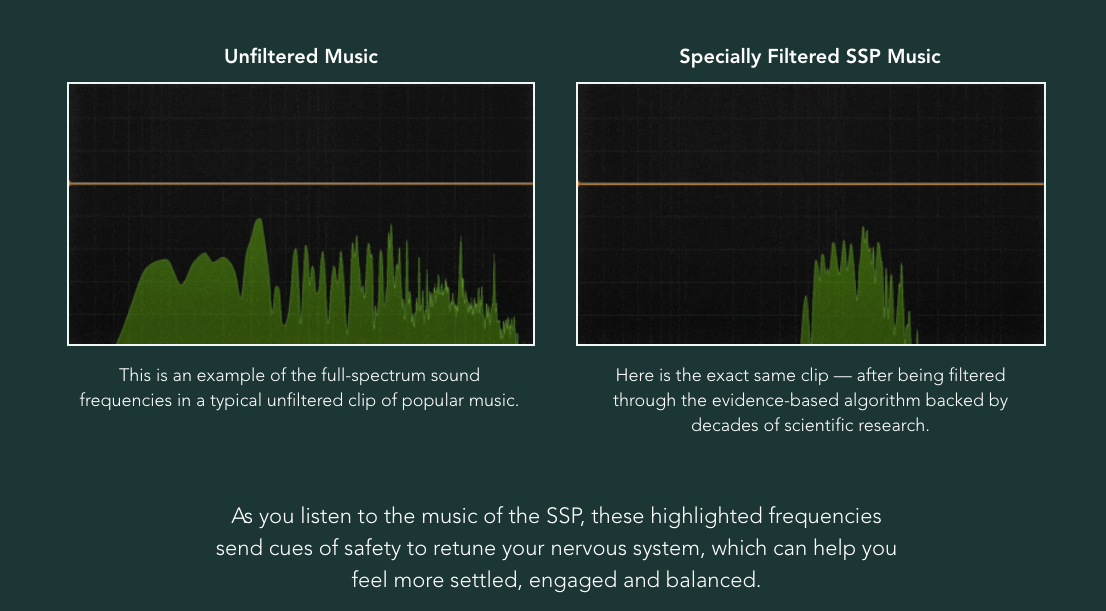
The SSP interrupts this feedback loop. Through specially filtered music, it sends cues of safety directly to the nervous system — helping it return to a regulated, responsive baseline.
What Regulation Makes Possible
When the nervous system is regulated, everything downstream improves: sleep, digestion, focus, communication, stress response, and the ability to move past difficulties rather than getting stuck in them.
Focus sharpens. Sleep stabilizes. Stress tolerance rises. Pain sensitivity decreases. Connection strengthens. The nervous system becomes more adaptable, more resilient, more performance-ready.
Emotional Regulation & Resilience
Athletes become more attuned to and in control of their emotional responses — moving through setbacks with greater flexibility and less disruption to performance.
Social Connection & Team Cohesion
By activating the neural circuits that support social engagement, SSP helps athletes feel more comfortable, present, and connected — with teammates, coaches, and support staff.
How MNDLab Athletes Use SSP
MNDLab athletes typically use SSP during natural recovery windows — first thing in the morning, after training, or while winding down for sleep. Many pair listening with light activities: gentle stretching, mobility work, breathing exercises, or easy movement.
There's nothing to perform or optimize. SSP fits seamlessly into existing training rhythms — and regulation happens naturally.
The result: a sustainable, evidence-based recovery tool that integrates into any high-performance environment without adding complexity.

LISTENING SAMPLEs
HEar IT FOR YOURSELF

What to expect from your SSP Experience
Frequently Asked Questions
-
The SSP is a powerful therapeutic intervention and is not available for use without the supervision of a trained professional. All SSP providers are required to complete an extensive training and certification course prior to delivering the SSP to ensure safe and effective delivery.
-
EXACTLY, its that easy!
A Safe and Sound Protocol (SSP) listening session is designed to be simple, calm, and low effort. Find a comfortable spot — a cozy chair, couch, or take a slow walk if that feels better. Many people listen while doing light, soothing activities such as gentle movement, stretching, breathing exercises, drawing, coloring, puzzles, or tidying up.
High-intensity exercise, cognitively demanding tasks, video games, or computer work are generally not recommended during sessions.
You’ll play the filtered music through headphones and simply notice how your body responds. There’s nothing you need to “do” — just listen.
You can pause at any time to check in with your nervous system. If you notice tension, fatigue, or emotion coming up, take a few slow breaths, stretch, or use a simple regulating exercise before continuing.
The goal is awareness and regulation — paying attention to how you feel, without forcing anything.
-
The music is divided into five hour-long sections. While you are not required to listen to a full hour each session, the filtration of the main SSP program is dynamic and progressive so it is important to listen in order and not repeat any sections without guidance from your SSP provider.
-
Sympathetic Nervous System
You can think of the sympathetic nervous system as a mobilization system that would support our "fight-or-flight" responses.
It functions like a gas pedal, mobilizing internal resources in response to danger. When this happens, you might feel an increase in your heart rate, fast and shallow breathing, tension in your neck and shoulders, and anxiousness.
Parasympathetic Nervous System
The parasympathetic nervous system is classically called the "rest-and-digest" state, which helps us heal, recover and conserve energy when we feel safe.
(Keep in mind that your "fight-or-flight" state and your "rest-and-digest" state may look different from someone else's.)
-
If you find yourself experiencing any of the symptoms below that have to do with dysregulation you might consider utilizing the SSP.
What does dysregulation look like?
The autonomic nervous system regulates many of our essential bodily functions. When the autonomic nervous system is challenged to access a "safe" state, you may notice one or more of the following symptoms:
Difficulty with digestion, eating or swallowing
Difficulty with falling and staying asleep, or sleeping too much
Rapid or shallow breathing, changes in heart rate and blood pressure
Challenges connecting with other people, feelings of isolation or loneliness, and anxiety
Trouble with concentrating, mental clarity, or creativity
Additional Resources
MUSIC & THE Nervous system
1
WHAT IS the POlyvagal theory & why does it matter?
2
Real world evidence of impact
3
Why the ear is so important to the nervous system
4

2026
Salt Lake City, Utah
“Physically I was cleared. Mentally I wasn’t. SSP helped me feel stable and confident again.”
- Marcus L. — Professional Skiing Athlete